


The dream of leaving office life behind and owning & operating your own farm remains strong for many Australians (me included!), whether you’re seeking a career change, pursuing a lifestyle shift, or just getting away from the traffic, that annoying Excel or that annoying manager!
Australia’s agricultural sector contributes over $77 billion annually to the national economy, offering genuine opportunities for well-prepared newcomers. Let’s be real, the reality of farming requires more than passion—it demands careful planning, significant capital investment, and comprehensive knowledge of modern agricultural practices.
A strong back also helps!
This guide walks you through every essential step of starting a farm in Australia, from initial planning through to operational success. Green thumbs unite!
Understanding Australian Agriculture
Before committing to farm ownership, it’s crucial to understand the breadth of opportunities within Australian agriculture. The sector encompasses diverse enterprises including broadacre cropping, intensive livestock production, horticulture, viticulture, and mixed farming operations. Each state offers distinct advantages based on climate, soil types, and proximity to markets. Ask yourself; are you looking at large scale, capital intensive, or a small scale, local operation?
Victoria leads in dairy production and market garden vegetables, with the Murray-Goulburn irrigation region supporting intensive agriculture thanks to the might of the Murray River. New South Wales dominates wheat and wool production, with mixed farming enterprises common across the slopes and open plains. Queensland’s climate favours cattle grazing, sugar cane, and tropical fruit production. Western Australia’s vast broadacre grain operations export wheat and barley globally, whilst South Australia combines cereal cropping with premium wine production. Tasmania specialises in cool-climate crops, dairy, and high-value vegetables.
Current agricultural trends favour regenerative farming practices, precision agriculture technology, and organic certification. The Department of Agriculture, Fisheries and Forestry provides comprehensive statistics showing increasing consumer demand for sustainably produced food, creating premium pricing opportunities for farmers adopting these approaches. This shift change in WHERE our food comes from and HOW it’s grown continues to be a key pillar in your decision, as much as if there is demand. Can you produce the crop with demand HOW the demand wants it?
Essential Planning Steps
Establishing a successful farm begins with thorough business planning. Your farm business plan must address market research, financial projections, operational strategies, and risk management. Start by identifying your agricultural niche—what products will you produce, who are your target customers, and what makes your offering competitive? Do you compete on price, quality, locality or another key selling point? What the story of your produce is, is now as important as the produce quality itself.
Market research involves understanding supply chains, pricing structures, seasonal demand fluctuations, and customer preferences. Will you sell livestock through saleyards, crops to grain merchants, or produce directly to consumers through farmers markets or operate your own field to table method? Each marketing channel requires different infrastructure, skills, and relationship building.
Financial planning represents perhaps the most critical planning element. According to Australian Bureau of Statistics agricultural data, regional farmland prices vary dramatically—from $5,000 per hectare in remote grazing country to over $15,000 per hectare for quality cropping land with reliable rainfall. Beyond land acquisition, budget for essential infrastructure including fencing ($5,000-$15,000 per kilometre), water systems ($20,000-$100,000+), machinery ($50,000-$500,000+), and working capital to cover operating expenses until income flows begin.
Most farming enterprises require 2-3 years before achieving consistent profitability. Your financial plan must account for this establishment phase, including how you’ll fund living expenses during this period as well as wages for support staff. Many aspiring farmers maintain off-farm income sources initially, transitioning to full-time farming as the enterprise matures. This also allows you to make slight adjustments in your business plan as you learn the land, the markets etc.
Selecting and Acquiring Land
Land selection determines your farm’s long-term viability and success potential. Soil quality, water access, climate patterns, and proximity to markets all influence what enterprises suit your property and their likely profitability.
Conduct thorough soil testing before purchasing. We always wonder WHY farming land is for sale if there’s nothing wrong with it, so test, test, test! CSIRO soil and landscape information resources help you understand soil types, drainage characteristics, nutrient levels, and limitations. Clay loams support diverse cropping options, whilst lighter sandy soils require careful management but warm quickly in spring. Soil depth, structure, and pH all impact what you can successfully grow.
This is a critical area of your plan. Will your soil support the produce you want to farm? Looking to grow a high PH crop but the soil is low PH? Forget it, the amount of money you’ll spend on soil amendments hoping that things improve will be frustrating AND costly. Move on to the next piece of land.
Water access proves equally critical. Properties with reliable water sources—whether rainfall, irrigation allocations, or groundwater licenses—command premium prices but offer far greater enterprise options. Understanding your region’s rainfall patterns, drought frequency, and water trading markets informs realistic enterprise selection.
An often forgotten element is water rights. You may have the perfect plot for farming a higher water reliant crop, but if you don’t have water rights to the creek or river that flows through the property, you’ll have to watch all of that precious research flow on by.
Location involves trade-offs between land cost and accessibility. Remote properties offer lower per-hectare costs but increase transport expenses, limit market access, and complicate labour recruitment. Peri-urban locations provide market proximity and infrastructure access but cost significantly more. Consider distances to major towns, processing facilities, livestock saleyards, and grain receival sites. Are you looking for a farmgate style operation? A back road location will be the death of your business before you start. Find yourself a high traffic road or highway and you’ve invested into an instant market driving by day and night.
Leasing provides an alternative to purchasing, particularly for beginning farmers. Agistment agreements, sharefarming arrangements, or longer-term leases reduce upfront capital requirements whilst allowing you to build experience and equity. Many successful farmers began by leasing before eventually purchasing their own property.
Legal and Regulatory Requirements
Establishing a farm business involves navigating various legal and regulatory requirements. Register your business structure—sole trader, partnership, company, or family trust—with the Australian Business Registry. Each structure offers different tax implications, liability protection, and succession planning options. Consult with rural accountants specialising in primary production taxation.
Agricultural enterprises require specific permits and licenses depending on your location and activities. Most states mandate Property Identification Codes (PICs) for livestock tracking. Chemical users need ChemCert accreditation. Water extraction requires licenses. Food safety certifications apply if processing products. The Business.gov.au agriculture section outlines federal requirements, whilst state departments handle local regulations.
Environmental regulations govern vegetation clearing, riparian zone management, and chemical use. Understanding your state’s Environmental Protection Authority requirements prevents costly compliance issues. Biosecurity obligations apply to all farmers, with mandatory reporting of notifiable diseases and pests. Don’t sleep on your local council either! They love to throw a heavy handed fine around for even the smallest infringement, and they’re now using tools like NearMaps to catch offenders.
Insurance requirements include property insurance covering buildings and equipment, public liability insurance protecting against third-party claims, and potentially crop or livestock insurance depending on your enterprises. Income protection insurance helps maintain cashflow during illness or injury. As primary producers operate expensive machinery and host visitors on properties, adequate insurance coverage proves essential.

Essential Skills and Knowledge
Modern farming demands far more than physical labour and traditional practices. Farm management encompasses diverse skill areas including agronomy or animal husbandry, financial literacy, equipment operation, marketing, and environmental stewardship.
Technical agricultural knowledge forms your foundation. Understanding plant or animal biology, nutrition requirements, pest and disease management, and optimal growing conditions directly impacts productivity and profitability. Cropping farmers need expertise in seed selection, soil fertility, weed control, and harvest timing. Livestock farmers require knowledge of animal health, breeding programs, pasture management, and handling techniques.
Financial literacy separates successful farmers from struggling ones. You must understand cashflow management, budgeting, break-even analysis, gross margin calculations, and tax obligations. Reading financial statements, tracking key performance indicators, and making data-driven decisions all require solid financial skills.
Equipment operation and maintenance knowledge reduces downtime and contractor costs. Depending on your enterprise, this ranges from operating tractors and harvesters to managing irrigation systems and livestock handling facilities. Basic maintenance skills save substantial service call-out fees.
Developing these critical skills requires structured education combined with practical experience. Our Certificate in Farm Management provides comprehensive online training covering all essential farm management areas. You’ll study at your own pace with expert tutor support six days a week, building the knowledge foundation for farming success.
Building Your Farm Infrastructure
Infrastructure development represents a major capital investment that should align with your staged business growth. Rushing to purchase all equipment upfront often leads to financial strain before income generation begins.
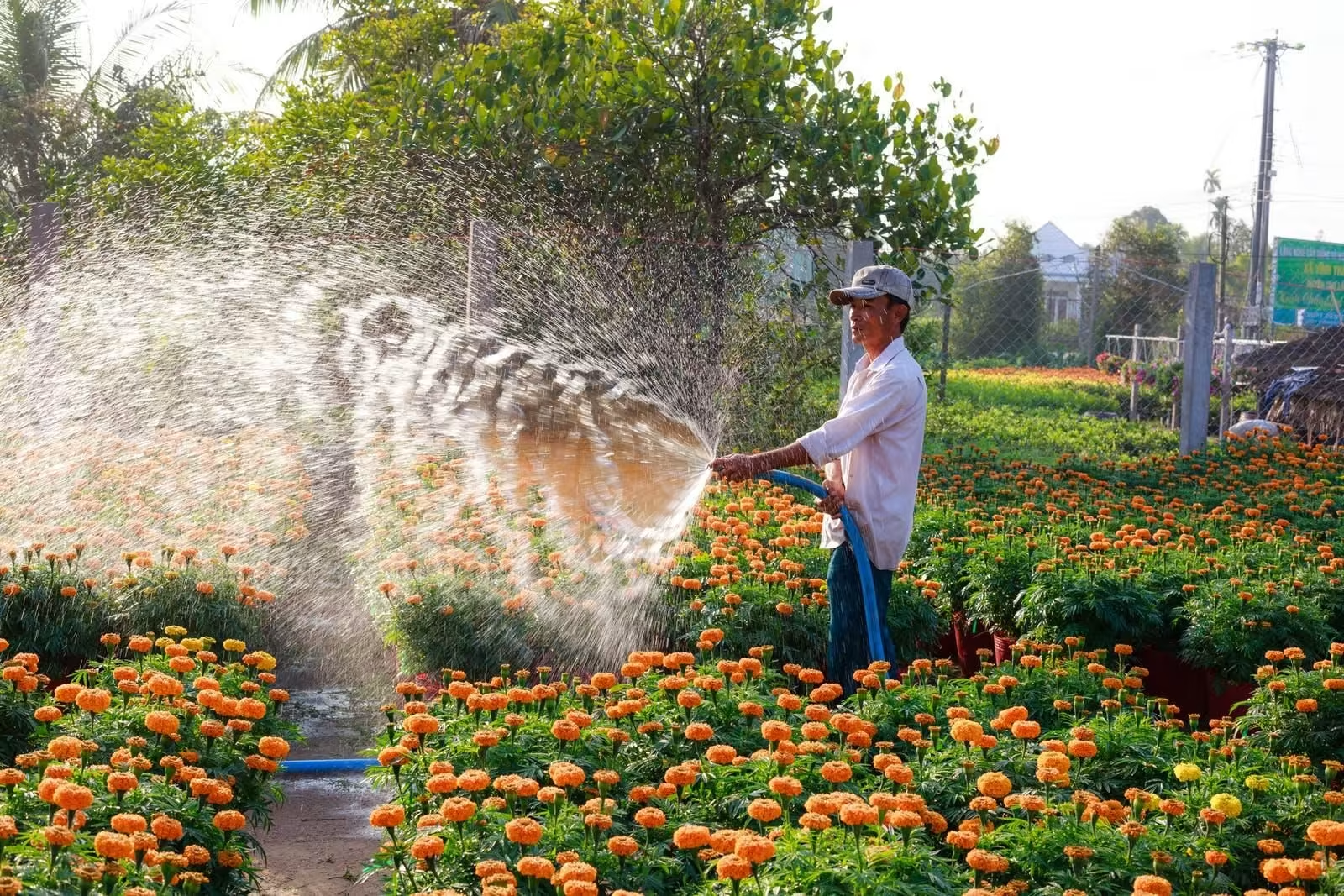
Essential infrastructure varies by enterprise type. Cropping operations require tractors, ploughs, seeders, sprayers, and potentially harvesters—though many beginning farmers contract harvest services initially. Livestock farmers need adequate fencing (different specifications for cattle vs sheep), yards and handling facilities, water systems, and shelter. Horticultural enterprises require irrigation infrastructure, potentially protected cropping structures, and post-harvest facilities.
Modern farms increasingly rely on technology including GPS guidance systems, farm management software, weather stations, and soil moisture sensors. Whilst technology improves efficiency and decision-making, prioritise investments offering clearest return on investment. Starting with basic farm management software for record-keeping and budgeting provides immediate benefits, whilst more sophisticated precision agriculture technology can be adopted as the business grows.
Consider staged development matching infrastructure investment to income generation. Many successful farmers began with minimum viable infrastructure, contracting additional services as needed, then gradually building capacity as cashflow improved. This approach reduces debt servicing pressure during establishment years.
Accessing Support and Resources
Beginning farmers shouldn’t navigate this journey alone—extensive support networks exist throughout Australia. Government grants and subsidies assist with specific investments including drought resilience infrastructure, environmental works, and technology adoption. State agriculture departments maintain current listings of available programs.
The Rural Financial Counselling Service provides free, confidential support for farmers experiencing financial difficulties or needing guidance on business planning and risk management. These services prove invaluable for navigating challenging periods or major business decisions.
Industry associations offer networking opportunities, professional development, and collective advocacy. Grain Growers Australia, Cattle Council of Australia, and countless commodity-specific organisations provide member benefits including market information, technical resources, and community connection. Local agricultural bureaus and young farmer groups facilitate peer learning and social support.
University extension services and research organisations including state agriculture departments regularly publish research findings, host field days, and deliver training programs. These evidence-based resources help you adopt proven practices whilst avoiding costly mistakes.
Mentorship programs connect aspiring farmers with experienced operators willing to share knowledge and provide guidance. Some programs formalise these arrangements, whilst informal mentorship often develops through agricultural networks and community involvement.
Starting Your Agricultural Career
Starting a farm in Australia represents a significant but achievable goal for dedicated individuals willing to invest in proper planning and education. Success requires combining practical skills, business acumen, and adaptive management as you navigate seasonal variability, market fluctuations, and evolving consumer demands.
Consider Sarah’s journey—a 35-year-old accountant who completed farm management training whilst working part-time on neighbouring properties. She leased almost 100 hectares initially in a well researched part of northern Tasmania, focusing on prime lamb production due to it’s high per kilo yield and export potential. Within four years, she’d built sufficient equity and experience to purchase her own property only 18 kms away and is now running a profitable mixed farming operation that now includes premium cattle. Her success stemmed from thorough preparation, ongoing skill development, and patient business building.
Whether you’re planning large-scale commercial farming or a smaller lifestyle property with agricultural income, proper education provides your foundation for success. Our Certificate in Agriculture and Farming offers comprehensive online study covering all essential knowledge areas from soil science and crop production through to financial management and marketing. Study at your own pace with expert tutor support available six days a week, and flexible payment plans starting from just $30 per week make quality agricultural education accessible.
The Australian agricultural sector continues evolving, offering genuine opportunities for well-prepared newcomers who combine traditional farming knowledge with modern business management, environmental stewardship, and technological adoption. Your journey starts with education—invest in knowledge today to build your agricultural future tomorrow.
Ready to throw away that morning commute and grow something you’ve always dreamt about?